

 Contact us
 Visit CPRE.org
 Donate
Q is for quarries
Our series of posts helping you to explore the county is an A-Z of Bedfordshire places, landscapes and history. Each post includes tips for walks and places to visit.
In this instalment we put the spotlight on nature recovery projects that have reclaimed quarries, gravel pits and industrial sites. You can find examples right across the county, ranging in size from small nature reserves to large landscape scale projects. Many are designated as Sites of Special Scientific Interest or County Wildlife Sites. The next time you visit one of the sites, why not take a moment to imagine the area in its old use as a working landscape, before it became a place to enjoy the natural world.
Chalk and limestone
Chalk is a fine textured variety of limestone and dominates the south of the county while oolitic limestone can be found in the Great Ouse Valley in the north. The Totternhoe nature reserve is the result of medieval stone quarrying, the spoil heaps have developed into wildflower rich chalk grassland. The site is criss-crossed by green lanes which were once drove roads for moving livestock from farm to market. The site is grazed to keep the grass short so that orchids and other flowers can thrive. Sundon Hills is home to another old chalk quarry. It is a small fragment of a once widespread habitat. As well as chalk grassland, there are beech woodlands and coombes, or dry valleys, which are distinctive of chalk landscapes.
In the Great Ouse Valley, Bromham Lake Nature Reserve is a former limestone quarry. The stone was used to build local houses and Bromham Bridge. Today, it is an important site for wetland birds, as well as hosting woodland and a wildflower meadow.
Sand
The Greensand Ridge is formed from greensand, a type of sandstone. At one end of the Ridge sits the RSPB’s The Lodge reserve. The Old Quarry Trail is 1.5 miles long and follows a hilly path through part of the reserve taking in an old sandstone quarry. The site also includes part of a working quarry which is home to rare minibeasts, rare plants including Weedy Frillwort, and in the summer, sand martins. This part of the reserve is being managed in partnership with Tarmac to create 80 hectares of wildlife friendly land.
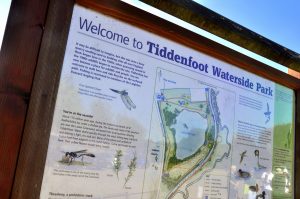
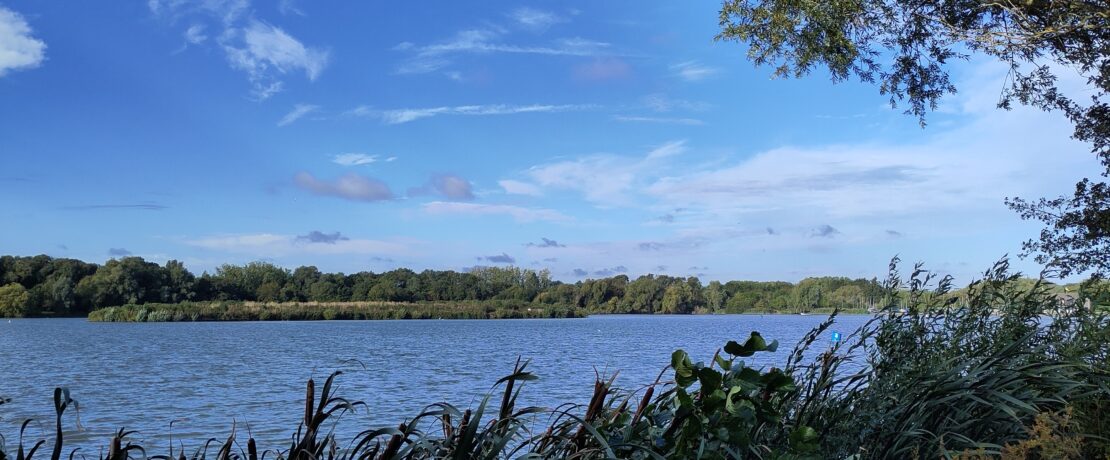
At the other end of the Greensand Ridge is Tiddenfoot Waterside Park. The lake was formed from a former sand quarry and is now a haven for wildlife. The walk round the lake is about a mile long, look out for water birds such as tufted ducks, mute swans, great crested grebes, coots and moorhens, as well as for amphibians and invertebrates. The trees, shrubs and hedgerows provide food, shelter and nesting sites for another range of birds including blue-tits, blackcap and willow warblers. Tiddenfoot is also home to part of the Sands of Time Trail which tells the personal stories of local people who worked in the sand industry’s quarries, wagons and railways. Other stories are of village life, childhood, archaeology and wildlife.
Gravel
Former gravel pits have been repurposed into wetland sites in several places in the county. These are all important places for overwintering birds, dragonflies, damselflies and specialist plants. Felmersham Gravel Pits and Cople Pits are both managed by the Wildlife Trust for Bedfordshire, Cambridgeshire and Northamptonshire and are home to a wide range of birds, including kingfishers and reed buntings.
Harrold-Odell Country Park was once a gravel quarry, in operation from after the Second World War until 1980, providing material to help build Milton Keynes. Since work stopped, the site has been managed to create a range of habitats, including lakes, river meadows, wet woodland and a Breckland type landscape. This means there is a wide variety of wildlife to see.
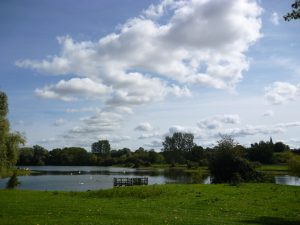
Priory Country Park in Bedford was also once a gravel extraction site. In its earlier life it was a Roman farmstead and then a medieval monastic site. Like Harrold-Odell Country Park it is now home to a diverse array of habitats including lakes, reedbeds, meadow and woodland.
Clay
Clophill Lakes Nature Reserve was once a Fuller’s Earth quarry. Fuller’s Earth is a type of clay which was put to a variety of uses including as an absorbent for oil and grease, in pesticides and fertilizers, in beauty products, paints and pharmaceuticals. Warren Lake and Castle Lake lie where extraction took place. The variety of habitats mean it is now home to wading birds, otters, dragonflies and damselflies. Marston Vale was a centre of the brick making industry and the area was covered in clay pits, many of which went on to become landfill sites.

The Forest of Marston Vale is an ambitious Community Forest project which aims to plant trees as well as creating and managing a range of habitats. It covers 61 square miles between Bedford and Milton Keynes and is one of the largest nature recovery projects in the region. When the Forest of Marston Vale was designated, just under 5%, of the area had tree cover, it now has 16.9% cover. Seasonal wildlife maps for the Wetlands Nature Reserve in the Millennium Country Park help visitors spot birds, insects and other wildlife.
Read more
Find out more about geology of our chalk and limestone landscapes in C is for Chalk and O is for Great Ouse Valley.
Read a guest blog from Jo Roberts, Community Engagement Officer at the Forest of Marston Vale, all about regeneration and the Forest of Marston Vale.
Explore Bedfordshire