

 Contact us
 Visit CPRE.org
 Donate
Industrial Legacies – Clophill Lakes
In this feature we explore one of Bedfordshire’s old quarries and how it has been preserved for nature
The CPRE celebrates its 100th anniversary in 2026. Across the century, its original mission has changed very little: to preserve, protect, and promote England’s natural environment. The founders understood that urbanisation and industrialisation were accelerating. They intended to make sure rural England was not forgotten or overtaken in that inexorable process.
The vocabulary now so familiar in conservation campaigns came about through the efforts of those original campaigners; titles like Site of Special Scientific Interest, National Park, and Nature Reserve are less than a century old. But alongside preserving the countryside, the organisation has also championed the renewal and removal of industrial scars, and the regeneration of ecosystems and habitats.
This feature is the first in a series celebrating the regeneration process by highlighting the transformation of three former quarries that, after the hard work and dedication of conservationists, have become havens for Bedfordshire’s native species. They provide us with places to appreciate the great outdoors and wildlife on our doorsteps.
Before the quarry
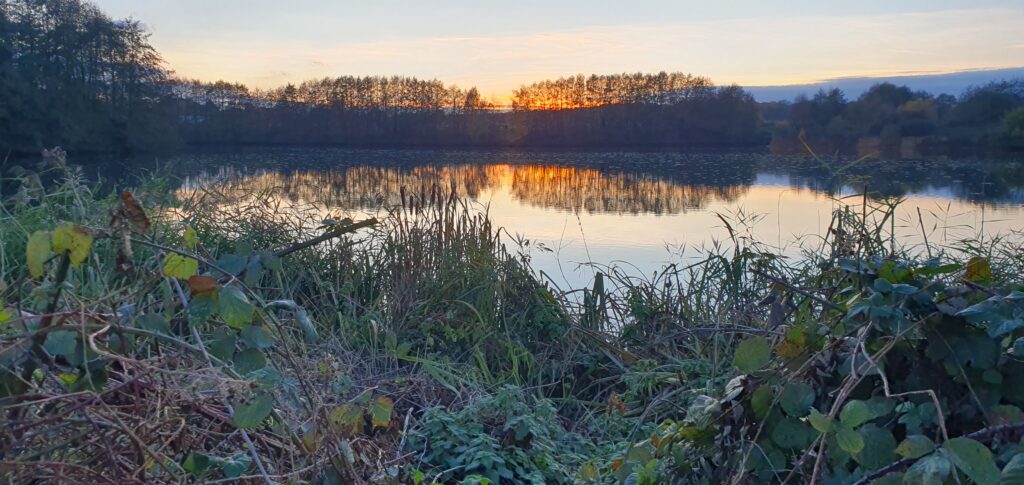
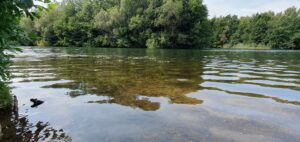
Walking around Castle Lake today, it’s clear that humans are interlopers in the landscape, allowed to appreciate it only temporarily. This wasn’t always the case. Long before earthmovers carved out an industrial presence, Cainhoe Castle dominated the landscape, deliberately positioned to overlook the river valley below. Cainhoe was part of a wider network of strategically placed motte-and-bailey castles, including those at Flitwick and Meppershall.
The castle became the centre of the barony of Nigel d’Albini following the Norman Conquest, a barony described by archaeologists as the second largest in Bedfordshire. Although the castle itself disappears from surviving estate records by 1272, medieval activity continued around the site. One possible turning point came in 1349, when the estate was devastated by the Black Death. The archaeological report suggests that the desertion of the medieval village of Cainhoe may have been connected to this period.
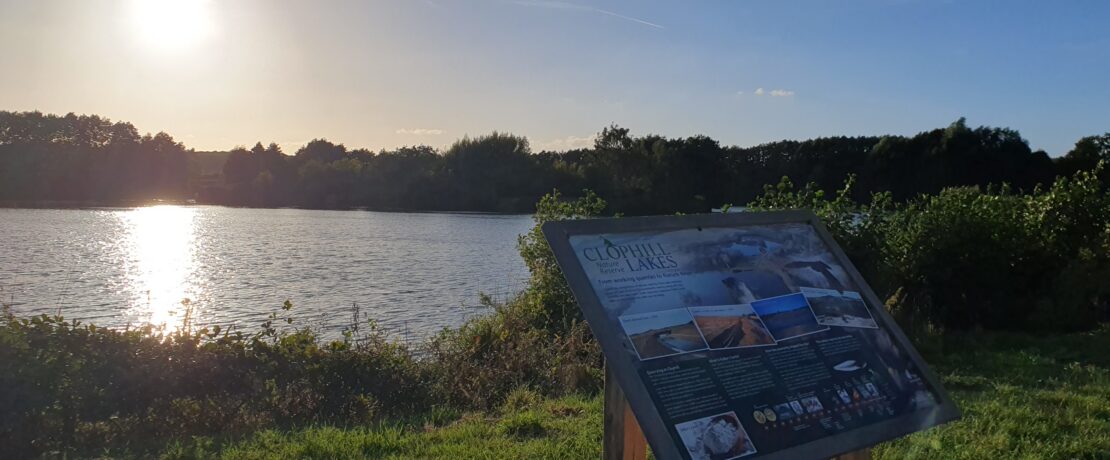
Information boards at Clophill Lakes Nature Reserve give an illustration of how the castle might have looked.
Quarry holes to wildlife haven
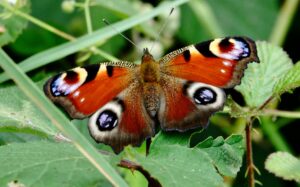
Today, Clophill Lakes are home to a wide variety of species, great and small, their eyes staring out from the reeds and the trees… Or perhaps it’s just the peacock butterfly whose vivid blue eyespots give the illusion of glaring back.
Far more likely to be watching is the red kite, silently circling overhead as it surveys the whole mosaic of woodlands, wetlands and lakes that are unrecognisable from the once unnatural blots on the landscape during the decades of quarrying that formerly defined it.
Finding Fuller’s Earth
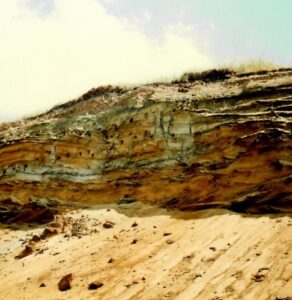
In 1934, the British Geological Survey identified deposits of Fuller’s earth in the area. Fuller’s earth is a volcanic clay with a wide range of uses, from cosmetics to industrial absorbents. It is a relatively rare phenomenon. Clophill’s seam was one of the UK’s most commercially valuable. The resulting extraction was extensive; Laporte Industries quarried the land from the 1950s to 2000.
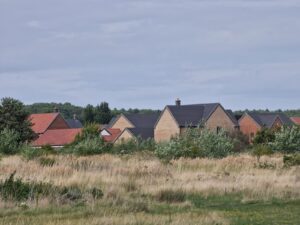
After Laporte’s departure, a small but determined group of residents led by the parish council foresaw the site’s potential. It successfully lobbied housing developers for an unlikely but positive outcome. The number of homes proposed at the site was successfully reduced from 90 to 50, and remarkably, the former quarry was designated as a community green space.
In February 2022, the Greensand Trust took ownership of the site. This was a tremendous outcome for the site, which had been unused, except for local teenagers breaking in to swim. The transformation that took it from industrial relic to award-winning nature reserve was a long and winding path that was once again guided by the community.
Protect and Enhance
The initial survey work conducted in the summer of 2021 was promising. An expert recorded 19 species of damselfly and dragonfly. Trail cameras recorded exciting evidence of other species already inhabiting the site, including water rails, otters, stoats and harvest mice.
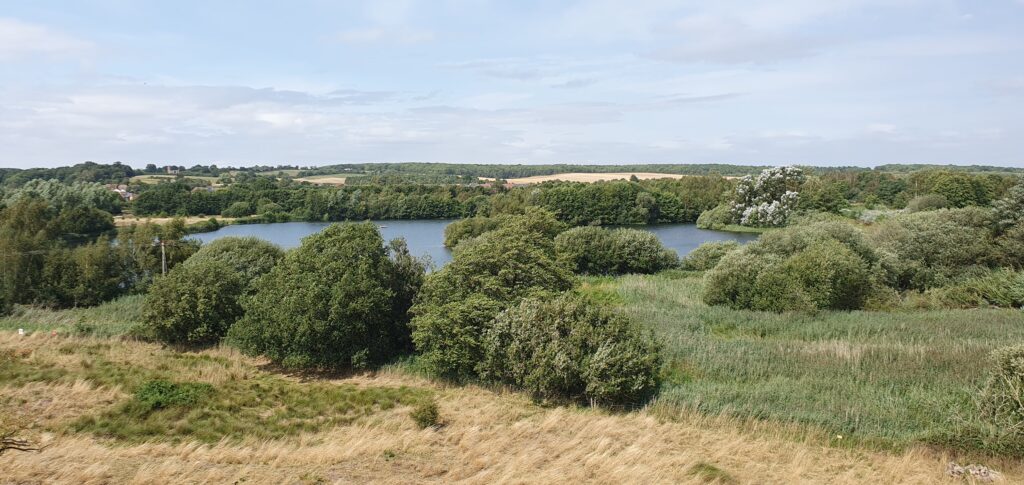
The Greensand Trust began to implement its plan to manage the site for the future. Here again, the community rose to the occasion. By March 2022, the Trust had planted 8,000 trees. This was alongside cutting back the invasive Himalayan Balsam. These were the first steps to transforming the site into the familiar mosaic of wetland meadow habitats.
Volunteering success
Throughout the site’s development, the support of local people of all ages has been vital to the reserve’s ongoing success.
School children from St Mary’s Lower School helped plant hedges, whilst 13 to 18-year-olds contributed 390 volunteer hours as members of the Greensand Trust’s Youth Ranger Programme. This programme taught the Young Rangers valuable conservation skills and nurtured their passion for the natural world.
The everyday care and monitoring at the site are still very much in the hands of volunteers. There are over 50 regular volunteers turning their hands to anything from monitoring bird nesting boxes to managing undergrowth to improve habitats.
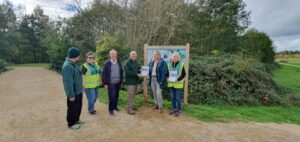
It was these volunteer initiatives that particularly caught the eye of the CPRE Bedfordshire judges when, in the summer of 2025 they awarded the Clophill Lakes the Living Countryside Award for the ‘Keeping it Wild’ category as well as Bedfordshire People’s Choice Award.
Rebuilding from disaster
On 1st August 2025, the boardwalk around Castle Lake was obliterated in an arson attack. The Trust had to ask the public for its help once again. £100,000 was raised to repair the damage. On the first anniversary of the site opening, two of the volunteers who first spotted the flames were able to reopen it, dedicating the new path to those who had made donations.

Clophill Lakes today and tomorrow
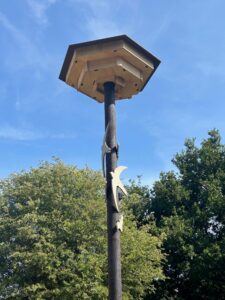
Despite the challenges of its creation and the particularly turbulent first year, the reserve enjoys several significant successes, especially its bird breeding habitat programmes. Between 2014 and 2026 the site has been home to over 1,500 fledglings. This year was especially successful, with 19 of the 20 nest boxes occupied. The crown jewel in the bird breeding programme is the unmissable swift tower, a purpose-built home for swifts. The tower emits the sounds of swifts to encourage them to nest. It provides a much-needed oasis of habitat that is particularly under threat.
On one of the lakes, there is what appears to be a boat – but no boating is allowed. This is a sand martin raft, aiming to expand the nesting opportunities, in addition to the sandbanks left from the quarrying.
On reflection
Those initial town planners and surveyors who founded the CPRE in the 1920s would be especially proud of the way this site has been championed by passionate individuals, from its inception to its present-day successes. The reserve proves that the way forward in conservation is not to change the world but to strive for greater harmony in our own little corner of it.
Find out more
Read about Clophill Lakes Nature Reserve Living Countryside Award
Visit the Clophill Lakes website for visitor information and a monthly diary about the wildlife found there: Clophill Lakes Nature Reserve