

 Contact us
 Visit CPRE.org
 Donate
Exploring the Old East West Railway
In this feature we explore the historic route of the old railway line between Oxford and Cambridge, formally known as the Varisty Way, or the Brain Line.
Today, following the former track between Bedford and Sandy, this public route offers riverside scenery, wildlife, and local history. Largely traffic-free and easy to follow, it can be explored as a day walk, a cycle ride or as part of a longer journey through Bedfordshire.
Route at a glance
- Start: Bedford Priory Park (Cycle Route 51)
- Finish: Sandy Town centre
- Distance: around 9 miles or 14 kilometres
- Estimated time: Three hours walking or 45 minutes cycling
- Route: Follow signs for National Cycle Network Route 51 & 12, on tarmac and firm but unsealed surface. Around 90% of the route is traffic free.
- Refreshments: Priory Country Park, Danish Camp and Sandy
- Public transport: Railway stations at Bedford and Sandy
Leaving Bedford behind
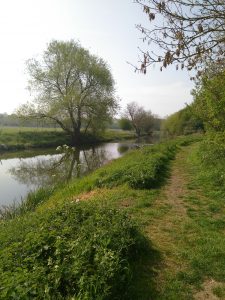
Beginning in the heart of Bedford, moving through Priory Country Park, the last signs of urban life are the Beefeater Restaurant. As the National Cycle Route 51 leaves Bedford behind and bridges the A421, the fading sound of traffic is replaced by the chirping of birds or the approaching ticking of bike wheels along the cycle way. The majority of the route is traffic-free, with wide Tarmac and hardened-gravel paths. As a national cycle route the trail has excellent signage, minimising the chances of getting lost.
The walk or cycle is enhanced by reading the Tales of the River timeline posted at intervals. These describe the Iron Age and Roman settlement site, just a few hundred feet from the path. Much like the timeline, the beauty of this walk is in its transitions and contrasts within the space of an afternoon. Busy Bedford life can literally be left behind.
History underfoot: University Way Railway line
The hundreds of walkers and cyclists who enjoy it are probably unaware of the old railway line’s connection to history.
Legendary mathematician Alan Turing and his code-breaking colleagues when recruited, used it to reach Bletchley Park, unaware of their top-secret role. They were told only
“On arrival at Bletchley [station], you will find a telephone kiosk. Ring this number and await instructions.”
The line was in use between 1862 and 1968, up until the Beeching Reforms, when Britain’s railway network was cut, resulting in the closure of over 2,000 village stations. Almost 60 years on, the remains of Willington Station platform are barely visible, nature having covered and reclaimed it.
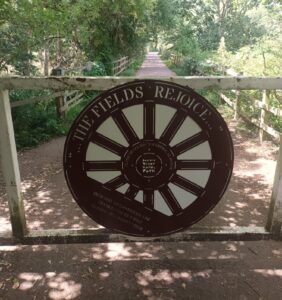
Other clues of the railway past are scattered along the route into Willington: a sign that marks the station’s entrance and the dilapidated brick buildings, once used for railway maintenance.
Today there are plans afoot to reconnect Oxford and Cambridge by rail, but not along this old route. Although a route swinging south and east of Bedford was proposed, the resurrection of this track is not part of that plan.
Danish Camp: Riverside refreshments and history
After walking 4 miles, walkers and cyclists alike can take a break at the Danish Camp restaurant and visitor centre on the banks of the Ouse. Canal boats, kayakers and swans all drift past, reflected in the water. But was it really a Viking site? Norse enthusiasts will be disappointed to learn that the name Danish Camp is a centuries-old misnomer, with the site first used one hundred years after the Vikings’ attack on Bedford. There are signs, near the site of restaurant, of the remains of a moated site and docks next to the River Ouse which extend towards the site of the old railway station.
16th Century Dovecote and Tudor stables
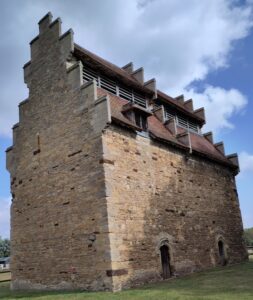
Leave thoughts of Vikings behind, and turn to the Tudors. Willington is home to a 16th-century dovecote (house for the breeding of doves and pigeons).
Built by John Gostwick, a key adviser to Henry VIII and crucial to the dissolution of the monasteries. Visiting the dovecote means a short detour off the route up Church Road before you reach the Danish Camp. The Dovecote and Tudor stables are managed by the National Trust and only open for inside viewing on Sundays during the summer, but a detour to visit and view the unique architecture is still worthwhile.
The final stretch: Great Barford to Blunham
Continuing east from the Danish Camp and Willington, the cycle Route 51 follows the course of the river until Great Barford weir. Here, dragonflies flit among the plants overhanging the river. The water flows over the weir, lapping or crashing into the river below depending upon the recent rainfall. The setting feels more remote than the reality that it’s only around 5 miles from Bedford.
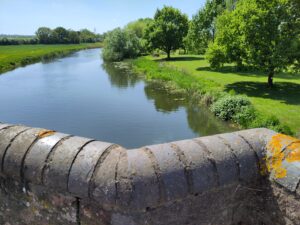
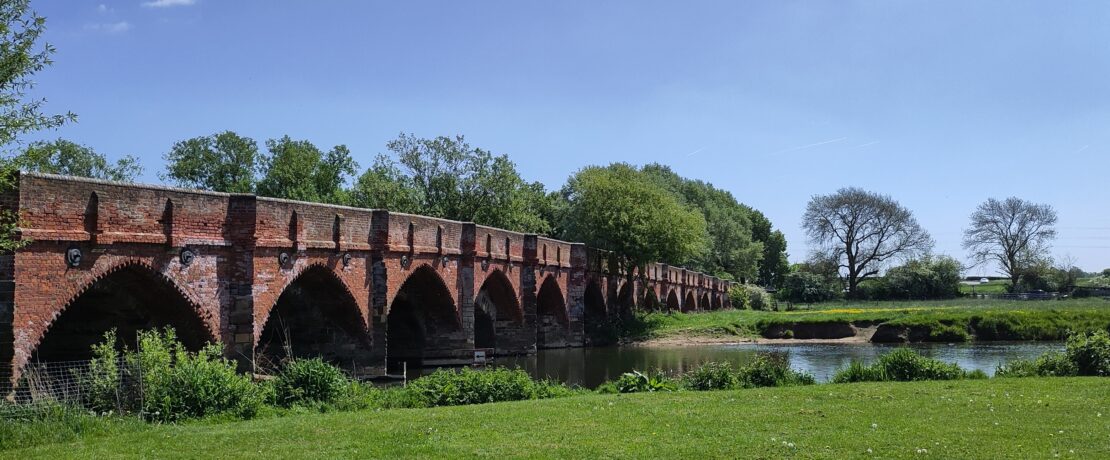
An extension to the walk is to continue along the river to enjoy views of and from Great Barford bridge. This can be done as an extra leg before returning back to the original trail.
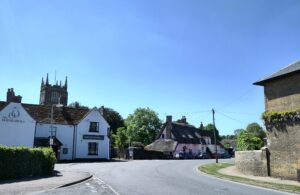
To get to Blunhman, the old railway Route 51 now merges with Route 12. Leaving the river and after crossing Barford Road, travelling between fields, the path turns into Old Station Court. Look out for the station house – now a private home – another example of a bygone era. After a careful stretch along Station Road, the familiar cycle path heads east again, flanked on both sides by farmland. This makes the final two miles into Sandy a pleasant, peaceful trail. By the time Sandy comes into view, Bedford feels much farther away than the distance suggests.
Places of note along the route
Priory Country Park – Lakes, wildlife and riverside paths near the start.
Willington station remains – Look for the overgrown platform and entrance sign.
Willington Dovecote and Stables – A historic National Trust site close to the route.
Danish Camp – Riverside refreshments, toilets and views across the Great Ouse.
Great Barford Bridge and weir – A peaceful place to pause beside the river.
Blunham station house – A surviving reminder of the former railway (private)
Sandy – Shops, refreshments and rail connections.
What about the new East West Rail?
Read more about the East West Rail proposals:
CPRE Bedfordshire submission to East West Rail Consultation
East West Rail proposal update 2026