

 Contact us
 Visit CPRE.org
 Donate
Green Belt and Grey Belt
Is reclassifying Green Belt as Grey Belt weakening countryside protection?
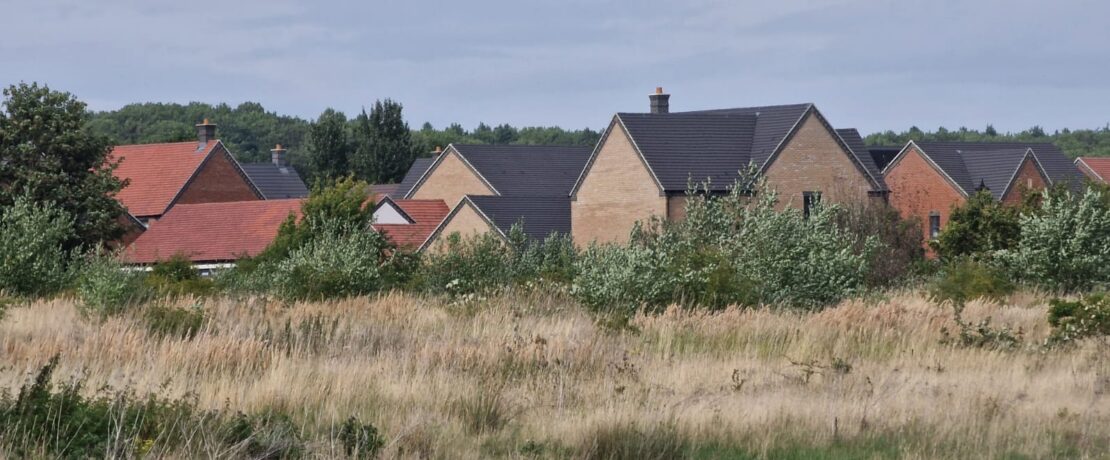
The government introduced the concept of ‘grey belt’, in 2024. The idea was to prioritise “ugly, disused grey belt land” in the Green Belt. Examples of ‘grey belt’ included disused petrol stations, abandoned car parks and low value scrubland.
This may sound like a ‘brownfield first’ policy, which we support. In reality, the classification of ‘grey belt’ is being used by developers to justify building in the Green Belt. The definition is so expansive that nearly anywhere in the Green Belt could be deemed ‘grey belt’.
Greying the Green belt
In its report, “Greying the Greenbelt”, the Community Planning Alliance (CPA) highlights examples of countryside and village-edge green fields being rebranded as ‘grey belt’ and becoming fair game for development. The report give the definition of the Green Belt from the governments National Planning Policy Framework and how the ‘grey belt’ policy fits in.
The CPA report concludes that “the many, well-known, benefits of Green Belts, including human well-being, natural capital, food production, carbon sequestration, flood prevention – and preventing urban sprawl, of course – have been swept away in a decision to reclassify land to meet poorly thought out housing targets. The result will be unchecked, car-dependent, urban sprawl into our much-loved countryside while doing very little to ease the housing crisis or the issue of ‘affordability’”.
You can read more here: Community Planning Alliance Report “Greying the Green Belt”
Grey belt on Our Doorstep
In Bedfordshire, we have only seen a few small sites (2-4 dwellings), in the Caddington and Toddington, where Green Belt has become ‘grey belt’ in the minds of the developer and Central Bedfordshire Council Planners.
But we can see many potential sites and applications in the planning process including appeals covering residential, employment, solar farms and a Battery Energy Storage System (BESS) where ‘grey belt’ status might be considered. Some sites are on the Best and Most Versatile Land (BMV) Grade2. If these sites are approved, the loss of Green Belt and countryside farmland, in Central Bedfordshire, will equate to around 447 hectares (1,100 acres).
In neighbouring Hertfordshire, CPRE Hertfordshire has identified more than 1,138 hectares (2,813 acres) of green fields in the designated Green Belt countryside, which have already received permission or are currently proposed for development by being classified as ‘grey belt’.
Read more – Grey belt land grab
Campaigning against ‘Grey Belt’
CPRE Bedfordshire supports the campaign to change the definition of ‘grey belt’.
You can use this template to write to your MP on this matter: Grey belt policy – write to your MP
The latest National Planning Policy Framework consultation (ends March 10th, 2026) considers Green Belt protection and includes possibly expanding the idea of ‘grey belt’. CPRE Bedfordshire will be closely monitoring progress on this issue and how it might affect local planning applications and decisions.
Read More
Find out more about what the Green Belt is and why it is important in our Green Belt Explainer: