

 Contact us
 Visit CPRE.org
 Donate
S is for Shire
Our series of posts helping you to explore the county is an A-Z of Bedfordshire places, landscapes and history. Each post includes tips for walks and places to visit.
In this post we’re going right back to the beginning to ask how Bedfordshire got its name and what life was like for those early residents of the area.
Beda and Bedfordshire
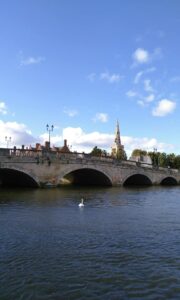
The first recorded use of Bedfordshire is in 1011 when it appears in the Anglo-Saxon Chronicle. The Chronicle is a collection of manuscripts which tell the history of the Anglo-Saxons. Bedfordshire was named after the shire or county town. The name Bedford comes from ‘Beda’s ford’, telling us that the town grew up around a river crossing. We know next to nothing about Beda, apart from the fact that he was a Saxon chief. Bedford quickly developed into a trading centre with a market, as well as acting as the administrative centre of the shire.
Shires and hundreds
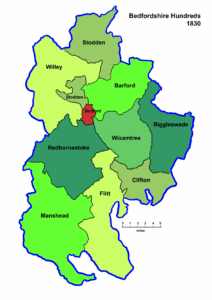
A shire was an administrative division. It was further divided into hundreds. The hundred was used as a way of organising tax assessments and for law and order. There were nine hundreds in Bedfordshire: Barford, Biggleswade, Clifton, Flitt, Manshead, Redbornestoke, Stodden, Willey and Wixamtree. Bedford was managed as a separate unit.
Law and order
Each hundred had a court that met once month in the open air. The location was often chosen because of a particular feature, for example the Wixamtree hundred court met at Wihstan’s Tree and the Barford court may have been held in a field with a stone cross. Everyone knew where and when the court was meeting and would attend to see private disputes and criminal matters settled. Cases included village brawls, obstructions of the highway and breaking the rules on the quality and price of bread or ale. At the shire court the shire-reeve or sheriff would hear more serious cases and deliver messages from the king.
Why were hundreds called hundreds?
No-one is entirely sure! It might have originally been an area of 100 hides. A hide was the area that could support a peasant family to farm for their own needs. Alternatively, it may have been an area liable for providing 100 armed men in times of conflict.
Anglo-Saxon Bedfordshire
The Anglo-Saxon period runs from the Romans leaving in 410 to the Norman Conquest in 1066. It was a time of rapid change, people from across the Germanic part of Europe arrived and settled here. Christianity was reintroduced, Old English developed as a language and the Vikings posed the threat of invasion. In other words, this was a time of movement of both people and ideas.
Large stretches of Bedfordshire would have been wooded. Settlements were small and many of the buildings were made of wood rather than stone so didn’t leave much trace. You can see some archaeological finds from the period at both The Higgins Museum in Bedford and Stockwood Discovery Centre in Luton. A large Anglo-Saxon Cemetery was found in Kempston and gives its name to the Saxon Centre which was built on the same site. The finds included pottery, brooches, buckles, combs, glass vessels, swords and shields which help bring the world of the Anglo-Saxons to life.
Traces of the Anglo-Saxons
If you want to search for evidence of the Anglo-Saxons in Bedfordshire then churches are a great place to start. These important buildings were often made of stone so some of the work of the period’s craftsmen survives. St Peter de Merton in Bedford, St Mary’s in Stevington, All Saints in Turvey, and Clapham parish church all have some visible Anglo-Saxon work.
Did you know?
The town of Wixams is named for the Wixamtree hundred but is actually in the hundred of Redbornestoke.
Read more
M is for Markets includes some of the early history of Bedford’s Charter Market.
Explore Anglo-Saxon Bedfordshire
Which hundred was my parish in?